
FUNDAMENTALS OF SUSTAINABLE DESIGN:
LIFE CYCLE ASSESSMENT
LIFE CYCLE ASSESSMENT
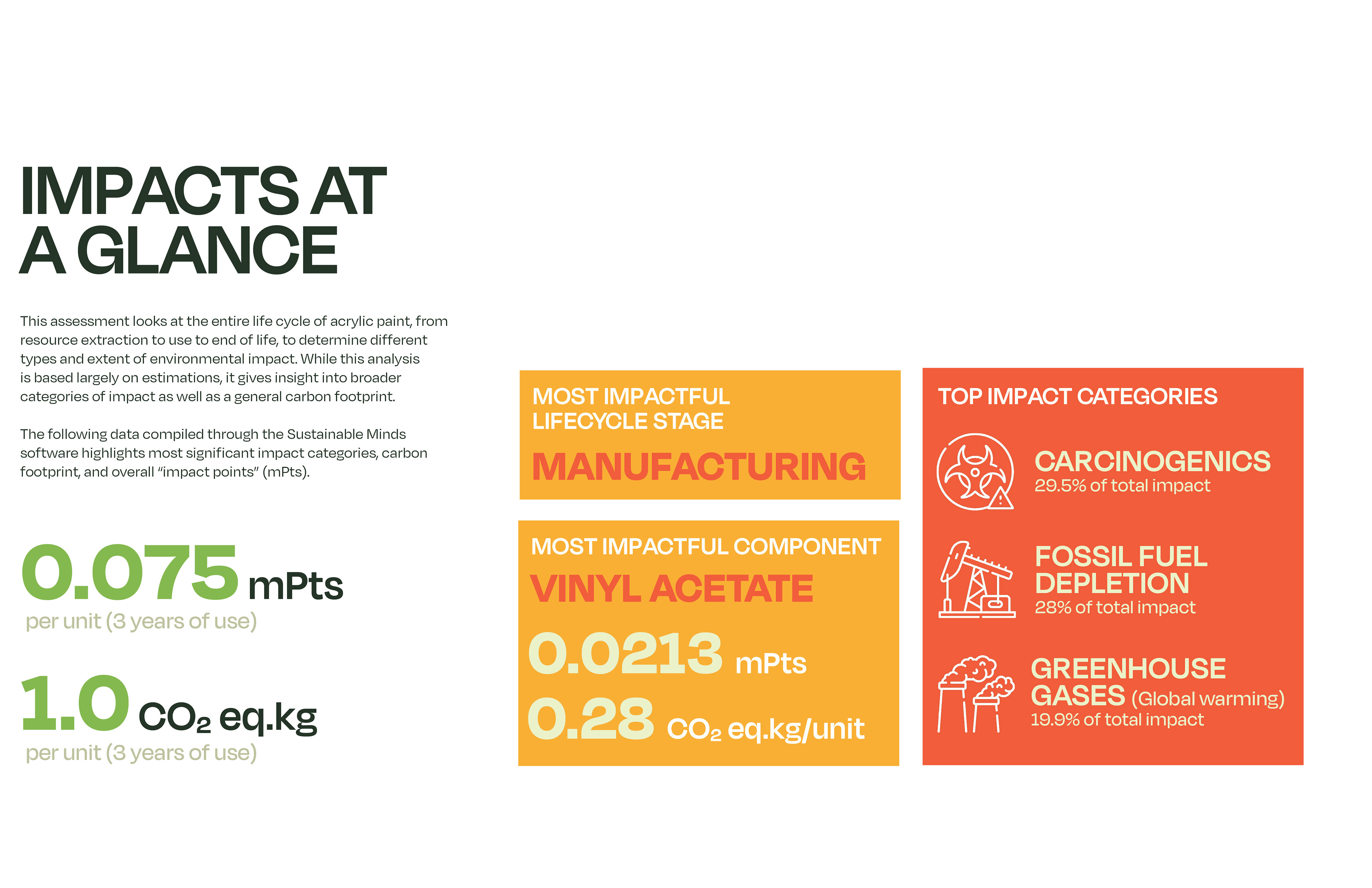
As an introduction to the sustainable design practice and life cycle assessment, this project paints a picture of the life cycle and impacts of artist's acrylic paint. TLDR: Acrylic paint is not water-based, it's plastic-based.
The life cycle assessment process begins with creating a system bill of materials (SBOM). Every component and process involved in the whole system of a product is accounted for: raw materials and extraction processes, manufacturing processes, transportation methods and mileage, energy usage during manufacturing and use, and disposal methods.
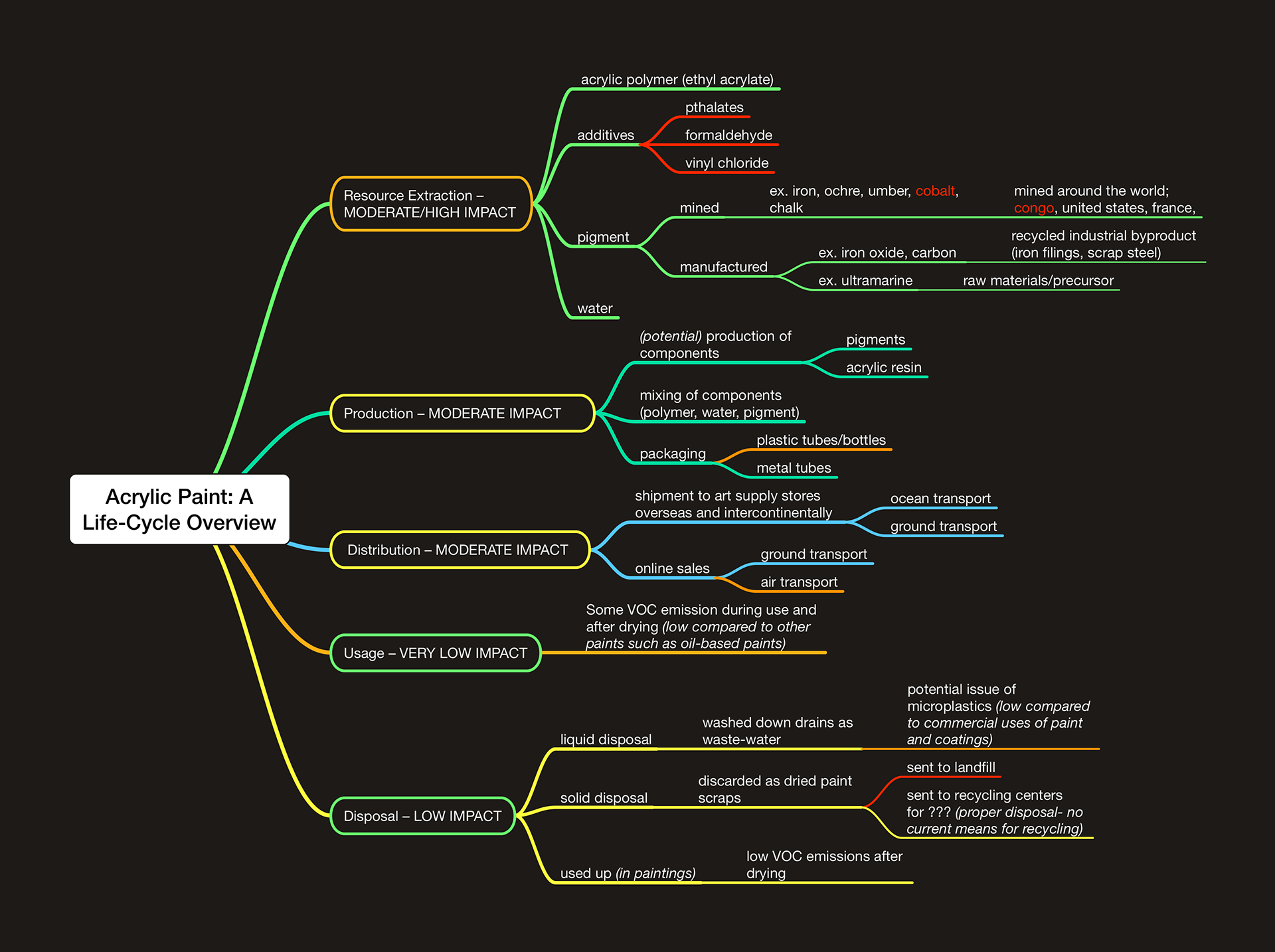
Once everything is accounted for, it's easier to build out a map that represents the whole system. For the map below I structured the cycle as a circle, to emphasize the gap between the end of life and potential reintegration into the cycle.
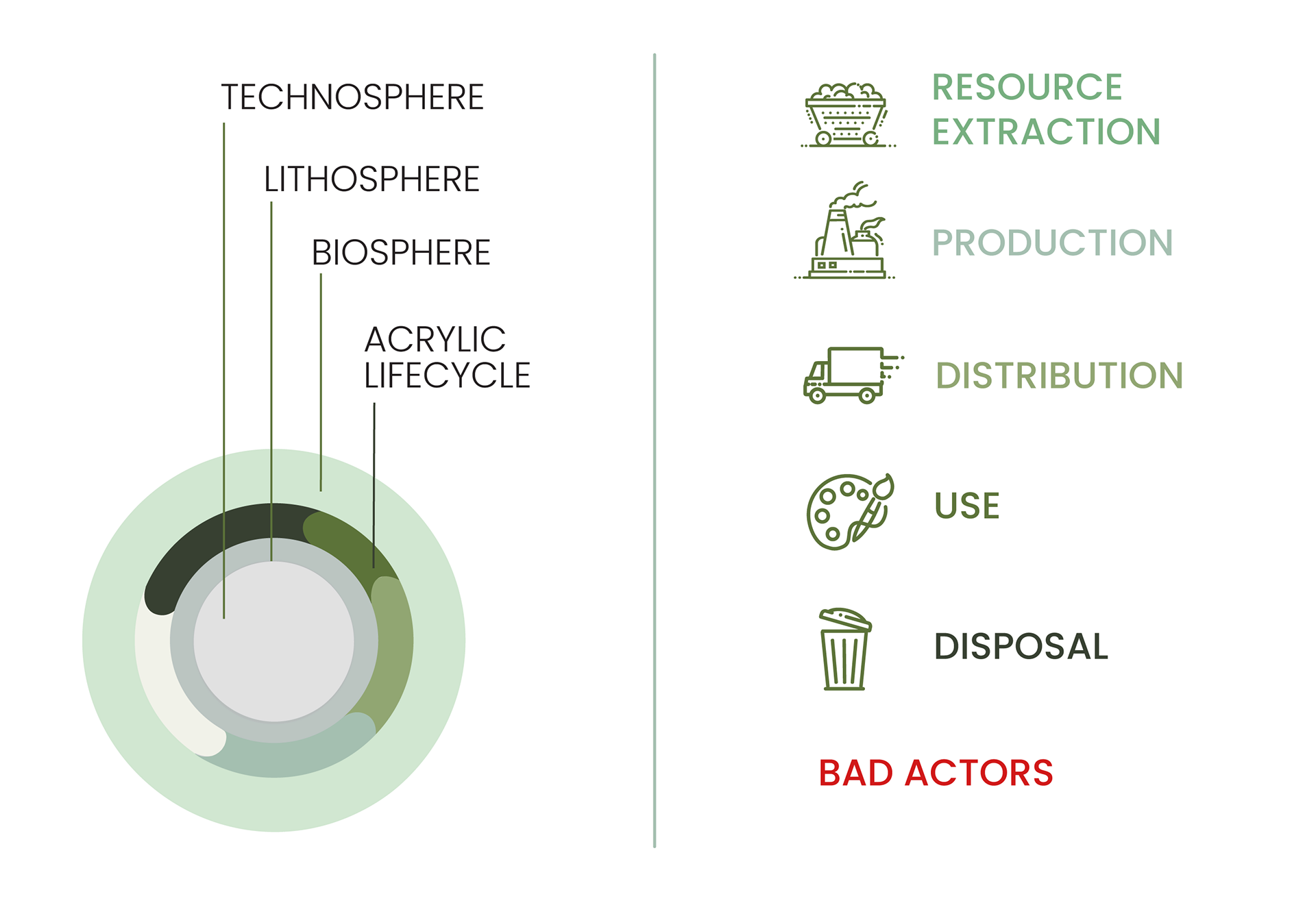
The cycle is also organized into different "zones", most importantly technological and biological cycles. This is an important aspect of the map since it highlights the combination of natural and manmade materials, which keep the product from being easily recycled back into the system. It also highlights the tendency for products to become "monstrous hybrids" which often end up in the biosphere, introducing potentially harmful materials where they shouldn't go.
The cycle is also organized into different "zones", most importantly technological and biological cycles. This is an important aspect of the map since it highlights the combination of natural and manmade materials, which keep the product from being easily recycled back into the system. It also highlights the tendency for products to become "monstrous hybrids" which often end up in the biosphere, introducing potentially harmful materials where they shouldn't go.
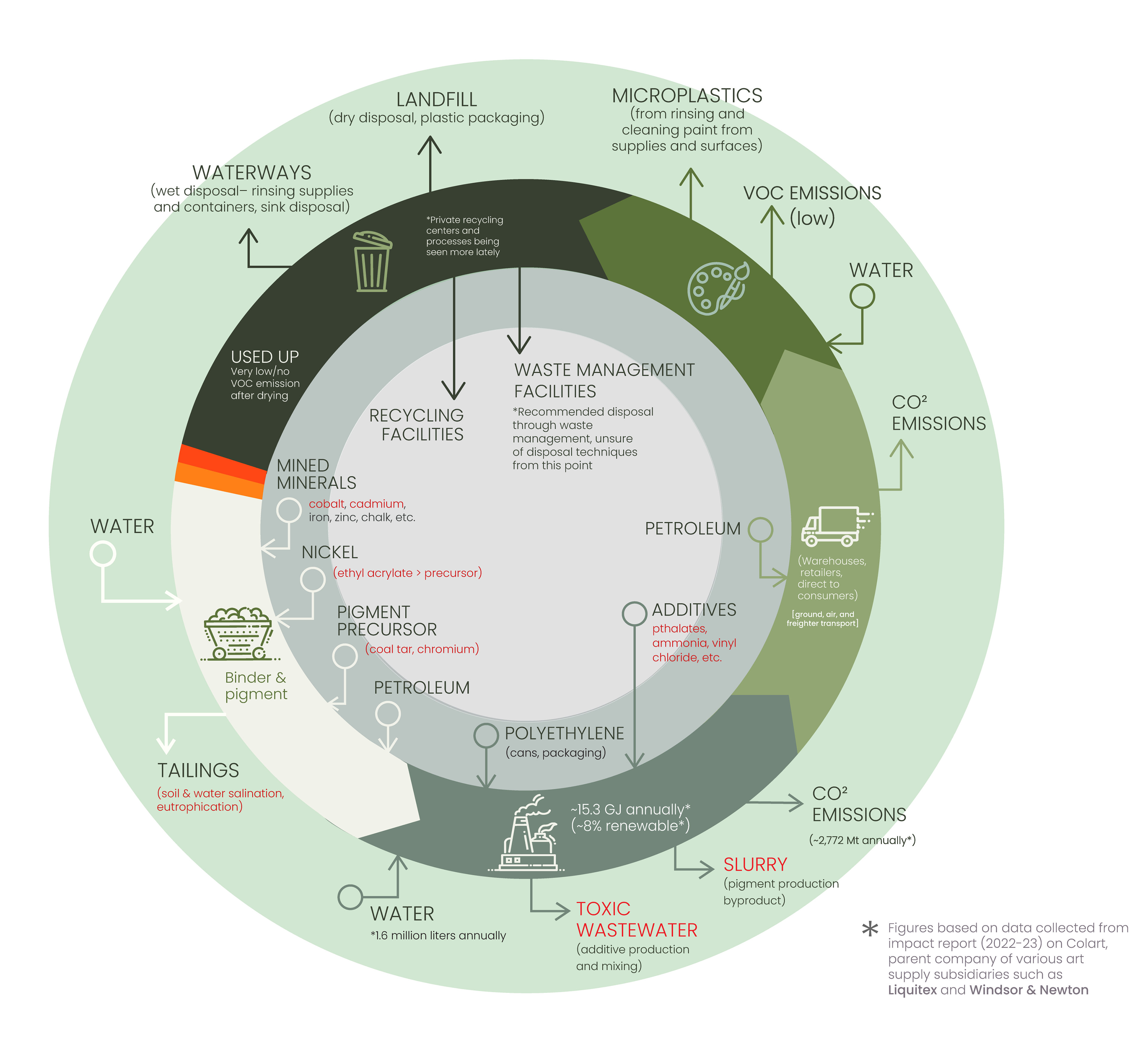
Final life cycle diagram of acrylic paint
Download the full report here